
A single backlink from a niche media outlet that your actual buyers read will outperform dozens of links from generic high-traffic sites. In my previous role at a B2B industrial component e-commerce platform, we do press coverage in niche industry media by offering research-based stories instead of standard press releases. The result: the smallest-traffic outlet generated the most qualified leads because CEOs read it and forwarded our content to their procurement teams.
Before the AI era, backlinks were one of the most influential factors in establishing industry authority (Ahrefs). In my previous company, a B2B industrial component e-commerce platform specializing in exclusive Japanese-brand machinery components, the backlinks we had when I started working there were scarce. Most of our link-backs came from home-based businesses, small industries, blogs, and hobbyists.
Among the many ways to build backlinks (guest posts, influencer collaborations, and so on), one approach stood out: striking a deal with media outlets and requesting a link back with a search-intent keyword, something uncommon when following the standard press-release route. If you have ever dealt with messy B2B keyword targeting, you know that getting the right search-intent keyword matters as much as the link itself, something I wrote about in detail in my guide to cleaning up B2B keyword research. As Ahrefs’ guide to Digital PR explains, editorial-driven PR generates more valuable backlinks than standard press release distribution because it positions your brand as a trusted source rather than just another corporate announcement.
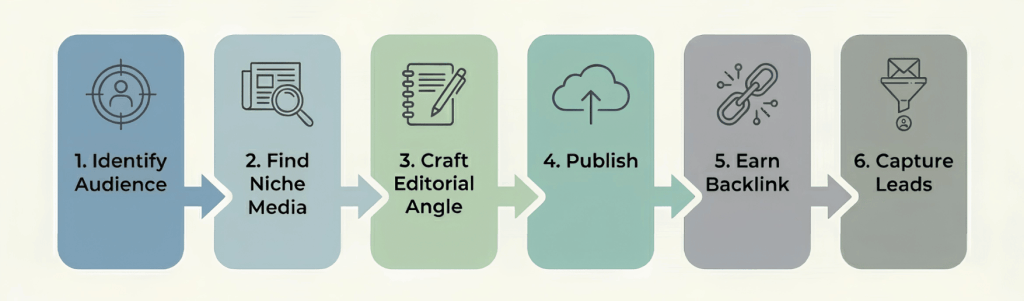
So how did we secure that kind of press deal? First, let’s discuss what kind of media we were targeting. Rather than going for the highest-traffic outlet we could find, we went to niche media aligned with our target market. This aligns with CMI’s B2B content marketing research, which consistently shows that audience relevance outperforms raw reach for B2B lead quality.
What is niche media PR for link building?
Niche media PR is the practice of securing editorial coverage and backlinks from industry-specific publications that your target buyers already read and trust. Unlike broad press release distribution, it focuses on relevance over reach, offering journalists original stories or data that serve their readership.
How We Chose Our Media Targets
For this campaign, we targeted Japanese CEOs and CTOs in our industry, procurement teams, and last but not least, the engineers who used our products (in our case, machinery engineers). We wanted three media outlets that could help us reach each of those audiences. For brevity, I’ll detail the first.
After some research, we found a niche industry news site specifically targeting Japanese expatriates (we were an Indonesian-based company, a Japanese subsidiary). We reviewed their reader profile and it was a match. Instead of striking the typical press-release deal, we offered a research-based comparison of how free delivery affects logistics-cost percentages (our promotion at the time was free delivery with no minimum purchase). Research shows that shipping costs and total cost of ownership are among the top factors in industrial procurement decisions, which gave us confidence this angle would resonate. We crafted the article’s angle so the press would want to publish it, not your standard company announcement.
What we shared:
- Its impact on business: the cost reduction in logistics.
- The Japanese-company angle: it’s common practice for Japanese companies to prefer working with other Japanese-affiliated businesses, a tendency rooted in the keiretsu system of interlocking corporate relationships that continues to shape Japanese business culture today.
- Original research: we backed the article with our own data, designed to give CEOs and CTOs the justification they needed when forwarding the information to their procurement departments.
The result: even though the views were the smallest of any media we did PR with, we saw an increase in leads over the following months. Based on our survey, those leads came from CEOs informing their procurement teams.
We applied the same tactics to the rest of our target markets. The only segment we struggled with was the engineers. Our audience research showed no large media pool where they concentrated; they were spread too thin to reach through PR alone. In our experience, engineers discover content through fragmented channels: vendor documentation, technical forums, YouTube tutorials, and niche publications, with no single media hub capturing a dominant share of their attention. So we added a boost via SEM to target their search intent. Understanding where your leads actually come from when you combine PR with paid search is critical, and I break down that attribution challenge in my guide to telling where your leads come from with SEO and paid ads
The Takeaway
Single backlink from a niche media outlet that your actual buyers read will outperform dozens of links from generic sites nobody in your industry visits. The playbook is simple but not easy: know exactly who you’re trying to reach, find the media they already trust, and offer the press a story worth publishing, not a press release worth ignoring. Your backlink is the byproduct. The real currency is relevance.
If I ran this campaign today, I would use AI to find the outlets faster, profile the audiences deeper, and draft the pitches sooner. But the core strategy would not change. Relevance wins.